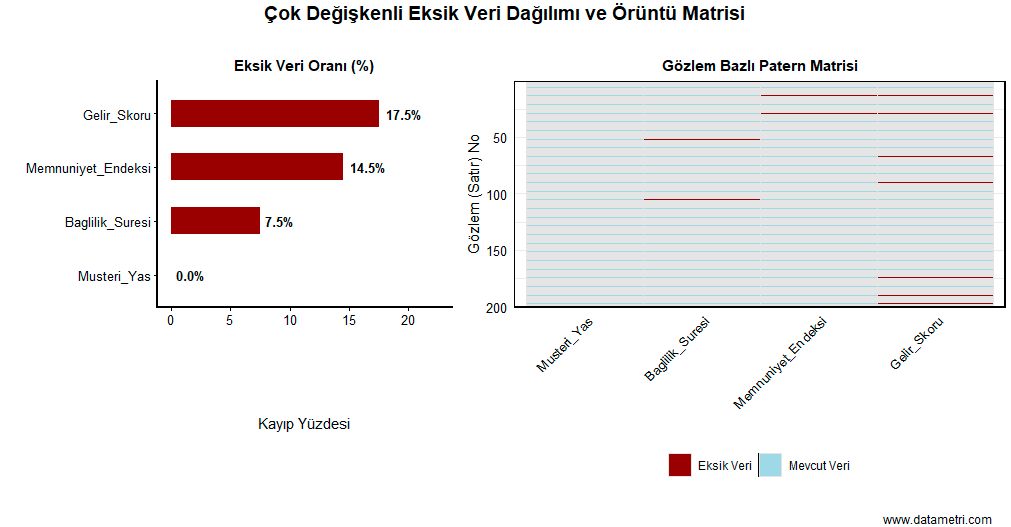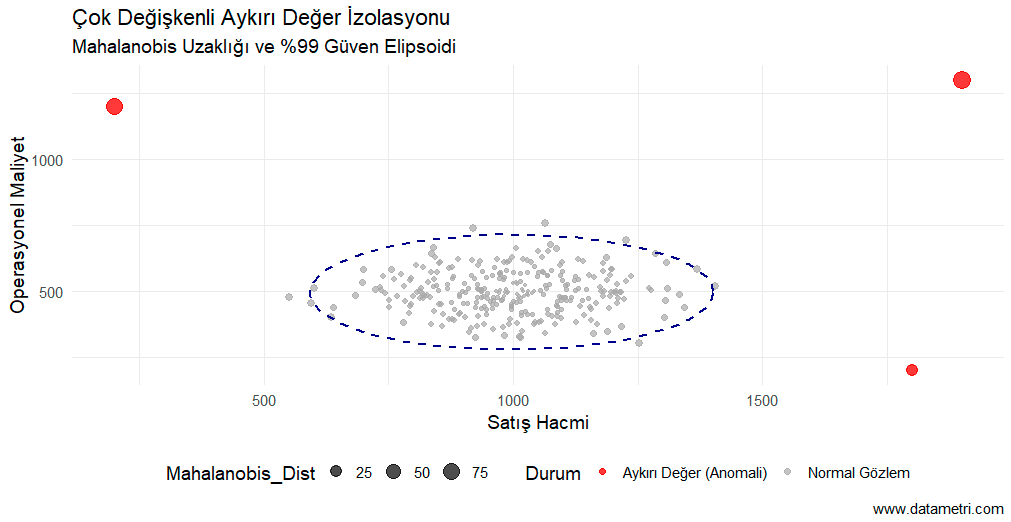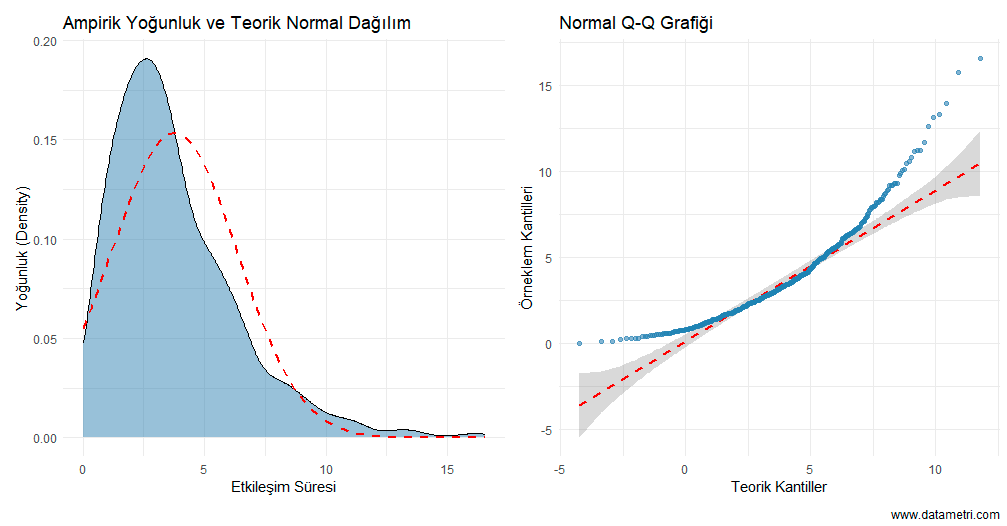
Especially in survey-based market research and social sciences projects, isolating the error variance stemming from the human factor (respondent bias) is a critical stage. With advancing data collection technologies and in-platform algorithms;
- Respondents giving the same answer to questions to avoid cognitive load (Zero Variance / Straightlining),
- Completing the survey in a time significantly below the biological limits of reading and comprehension (Speeder detection),
- Detection of meaningless text entered into open-ended questions by bots or careless respondents (Gibberish / NLP Control)
such fundamental behavioral abnormalities can now be easily filtered out during the data collection phase via integrated scripts. Therefore, at datametri.com, we focus more intensively on deterministic inconsistencies that require much deeper statistical modeling, which standard software fails to detect.
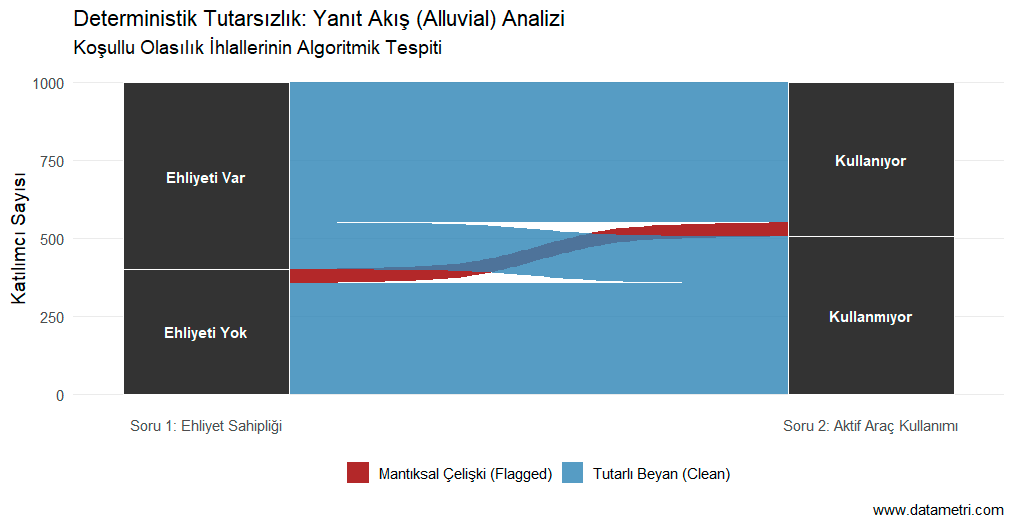
1. Deterministic Inconsistency and Algorithmic Cross-Validation (Logical Consistency Checks)
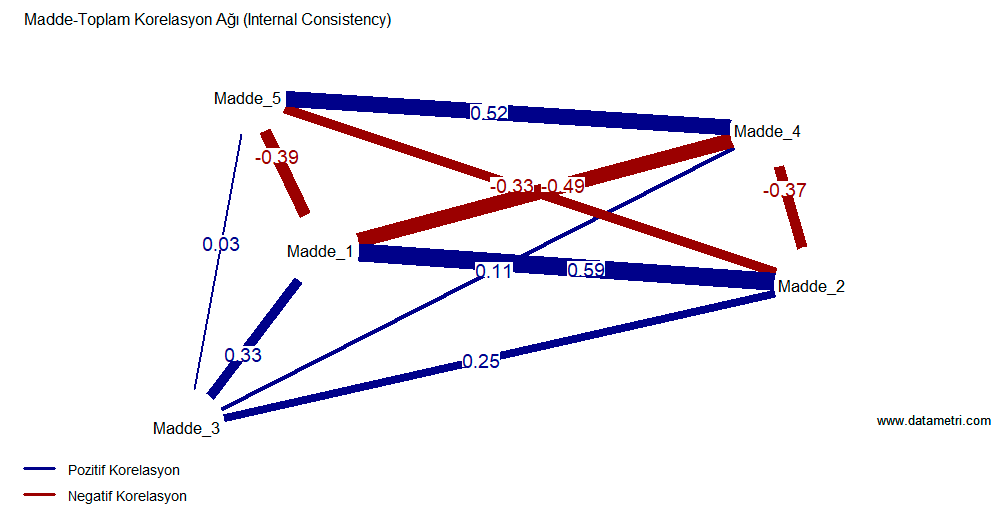
"Test the Logical Consistency of Your Respondents with Algorithms"The biggest risk overlooked by standard platforms is conditional contradictions given by respondents to logically related or mutually exclusive questions. With the deterministic algorithms and conditional probability matrices we have established, logical fractures within the dataset are detected, the overall validity of the survey is scored, and unreliable observations are firmly isolated.
- Are respondents answering by truly understanding the research construct, or are they progressing strategically without reading the questions?
- How many respondents with internal contradictions capable of manipulating the overall analysis results exist in my dataset?
When reading market dynamics or positioning a new product, the cost of strategic decisions based on conflicting consumer statements is exceedingly high. This analysis ensures that you build your insights solely on verified "true" target audience data that possesses 100% logical consistency within itself; ultimately protecting the ROI of your research budget.