Datametri Logo
01
Conceptual Framework Construction and Hypothesis Formulation
DAG Analysis Hypothesis Design

It is the process of transforming the abstract (latent) structure of the research problem into empirically testable, directional, and falsifiable mathematical equations. The goal is to ensure a simultaneous and exact alignment between the concept intended to be measured and the data to be collected from the field.

Isolated Biases and Countermeasures
  • Omitted Variable Bias: In order to prevent spurious correlations created by critical control variables omitted in the hypothesis setup; we map the causal paths of dependent, independent, mediating, and moderating variables a priori using Directed Acyclic Graphs (DAG).
  • Concept Creep: We maintain the internal consistency of the research setup by filtering out structural noises added during the research with the logic of "Let's ask this too just to confirm" or that do not serve the main purpose.
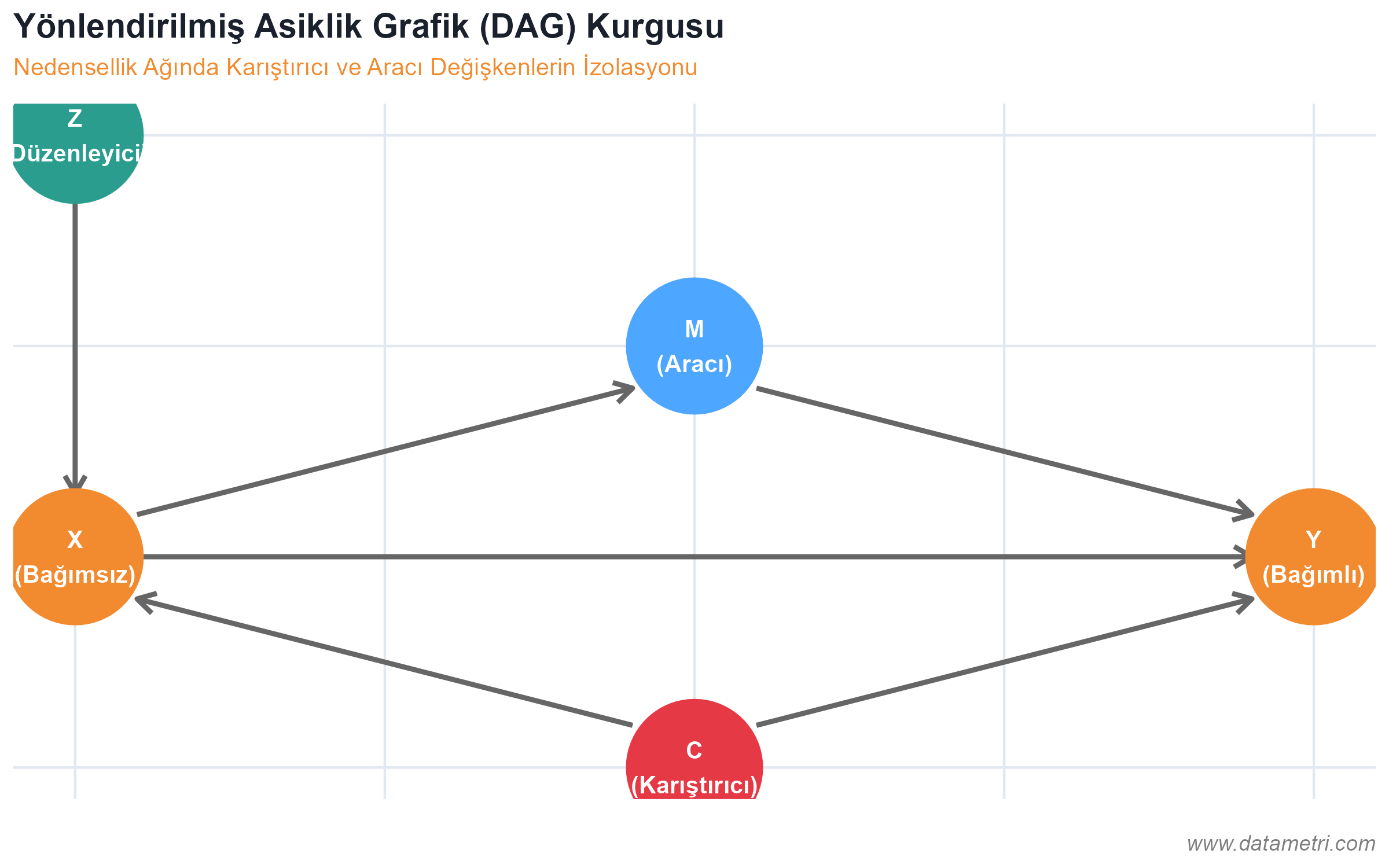
Directed Acyclic Graph (DAG) Setup
caption = 'www.datametri.com'
The conceptual framework of your research is coded as a topological "Causality Network" that will directly provide data to structural equation models (SEM) or econometric regressions.
02
Study Design and Causal Inference Optimization
Causal Inference Study Design

In line with the primary objective of the research; it is the algorithmic determination of the framework that will generate the highest statistical power among Experimental, Quasi-Experimental, or Observational study designs.

Isolated Biases and Countermeasures
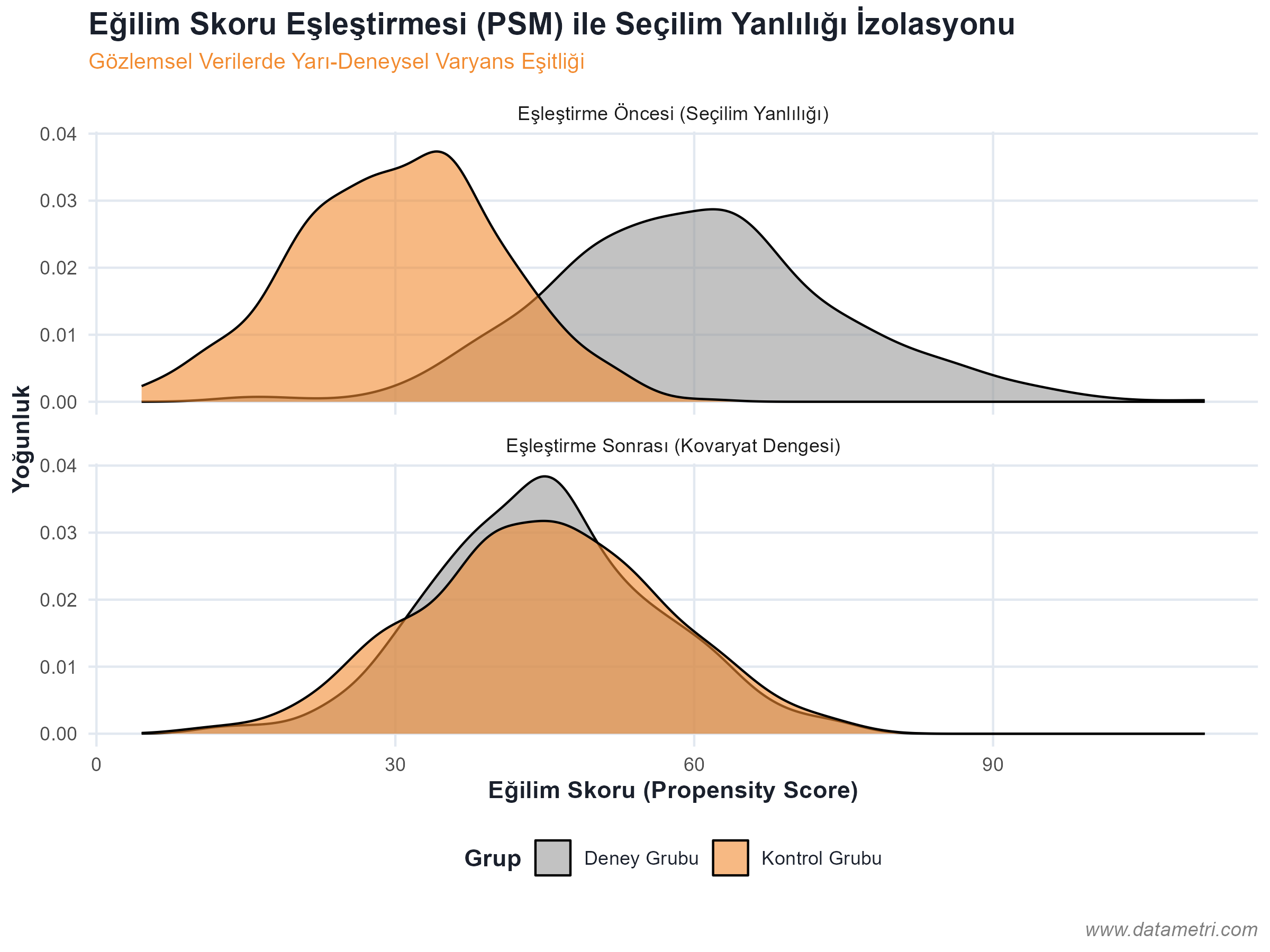
  • Selection Bias: Especially in clinical trials and A/B tests, we design algorithmic Block Randomization protocols to prevent unobserved covariate variables from manipulating the experimental and control groups.
  • Confounding and Endogeneity: In observational studies where random assignment cannot be made for ethical or practical reasons; we plan advanced econometric designs from the beginning such as Propensity Score Matching (PSM) or Difference-in-Differences (DiD) to eliminate covariate inequalities between the experimental and control groups.
Selection Bias and PSM Balance Plot
caption = 'www.datametri.com'
Our goal is to maximize the ability of the data to be collected from the field to prove "Causality". Instead of leaving confounding variables to after the analysis, we establish hierarchical barriers to isolate them during the data collection phase.
03
Sampling Theory, Frame Selection, and Statistical Power Analysis
Power Analysis Sampling Frame

It is the phase of defining the population and mathematically establishing the Sampling Frame that can represent this population without statistical bias. We reject memorized rules lacking empirical basis like "at least 300 people" and determine the sample size n according to analytical models.

Isolated Biases and Countermeasures
  • Coverage Error and Echo Chamber Illusion: We prevent practices that create an "Ecological Fallacy" by collecting data only from specific internet panels or social media platforms. We construct Stratified or Probabilistic sampling algorithms to reflect the true genetics of the population into the field.
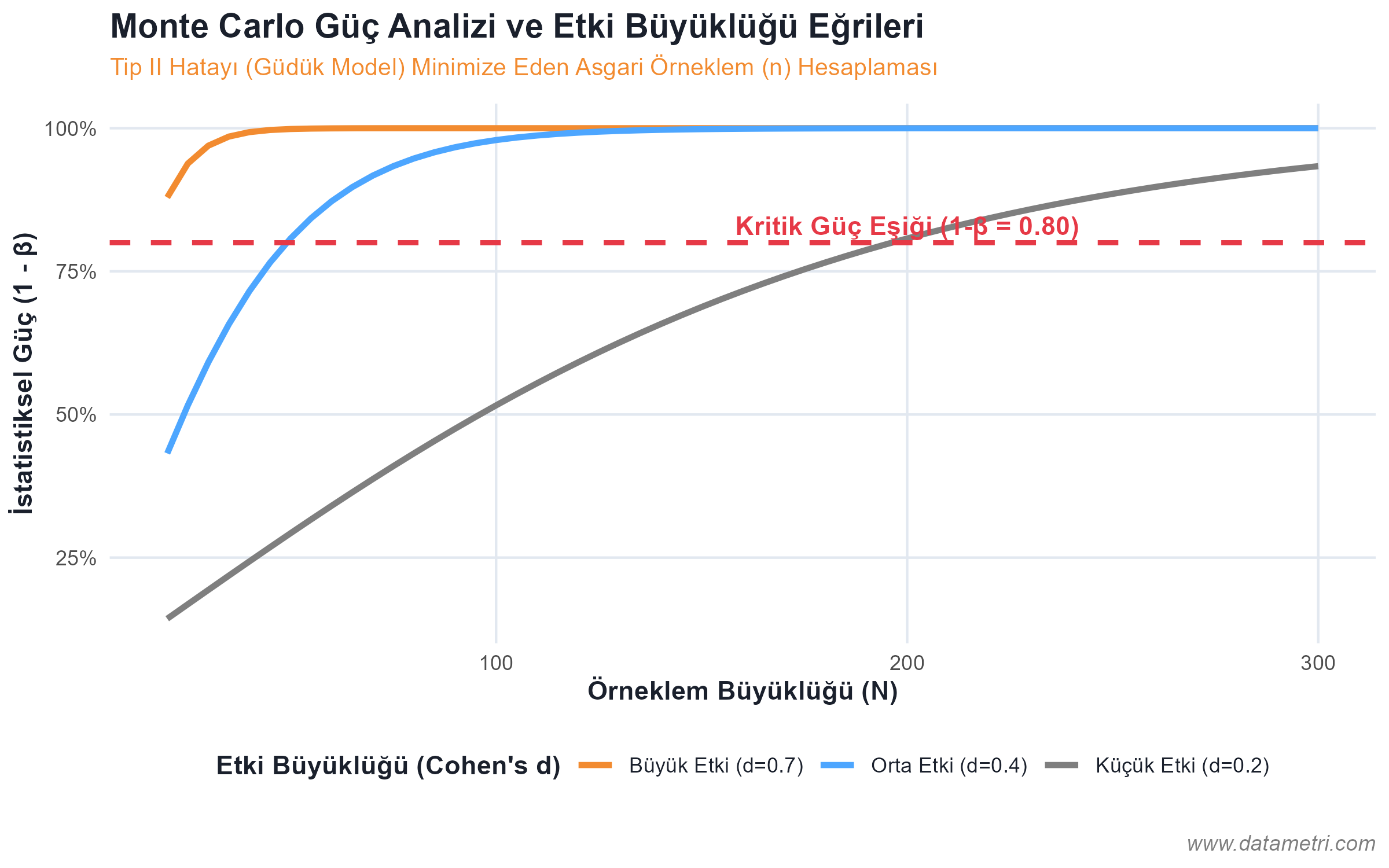
  • Type II Error (Underpowered Study): To avoid missing the "significant difference" we hope to find at the end of the research; we calculate the minimum sample size at an 80%/95% power level with G*Power or Monte Carlo simulations, based on the nature of the test to be used and the targeted effect size.
  • Non-response Bias: To balance representation deviations that may occur after data collection, we define demographic control quotas a priori for Iterative Proportional Fitting (Raking) procedures.
Monte Carlo Power Analysis and Effect Size Curves
caption = 'www.datametri.com'
Excess data is waste, while missing data is a statistical disaster. With G*Power simulations, we prevent you from spending money from the very beginning on a study that will be statistically underpowered and fail to produce any significant findings.
04
Measurement Theory, Cognitive Load Management, and Field Limitations
Cognitive Load Satisficing

It is the process of optimizing the data collection instrument (survey, experimental inventory, scale) in accordance with the limits of human physiology and cognitive capacity.

Isolated Biases and Countermeasures
  • Measurement Error and Social Desirability Bias: We ensure that questions are purged of leading statements, double-barreled meanings are resolved, and sensitive topics are shifted to a neutral plane.
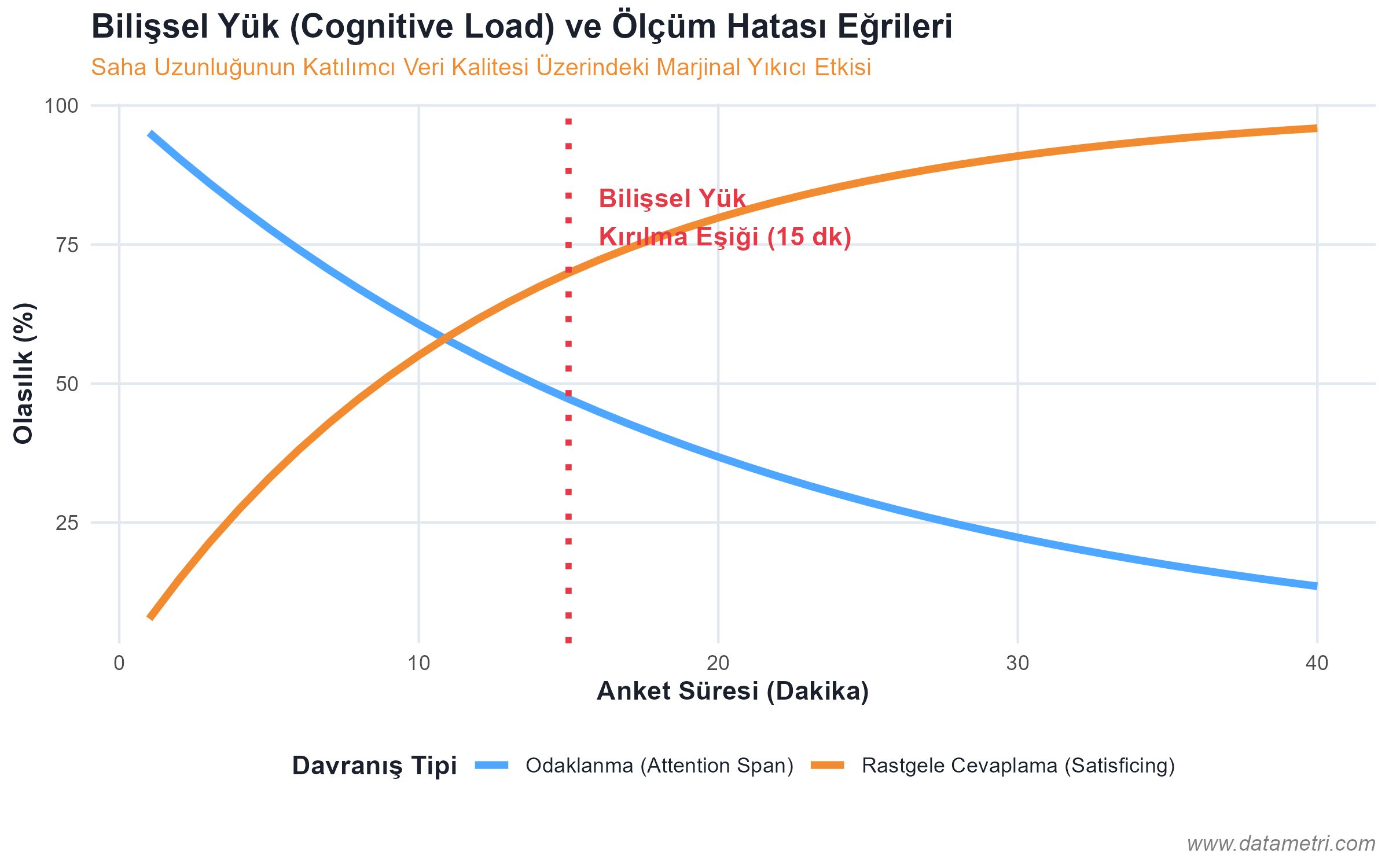
  • Satisficing and Survey Fatigue: We determine the maximum time/cognitive load thresholds permitted by the applied methodology. To prevent participants from resorting to straightlining, we algorithmically embed attention check items into the form.
Cognitive Load and Satisficing Distribution
caption = 'www.datametri.com'
As the screen area a person looks at or the duration extends, their attention span drops logarithmically. We prevent data pollution (noise) by synchronizing the scope of the research with the participant's technological device and cognitive limits.
05
Methodological Transparency and International Standards (CONSORT, PRISMA)
CONSORT / PRISMA Pre-registration

It is the alignment of all design steps of the research with the global methodological reporting guidelines mandated in academic publishing (Q1 journals) and by top-tier research funding boards (NSF, NIH).

Isolated Biases and Countermeasures
  • Publication Bias and P-Hacking: In order to prevent the manipulation of data until a significant result is found during the analysis phase (P-Hacking) or writing hypotheses after seeing the results (HARKing); we lock analysis plans and methodological decisions with Pre-registration protocols before data is collected.
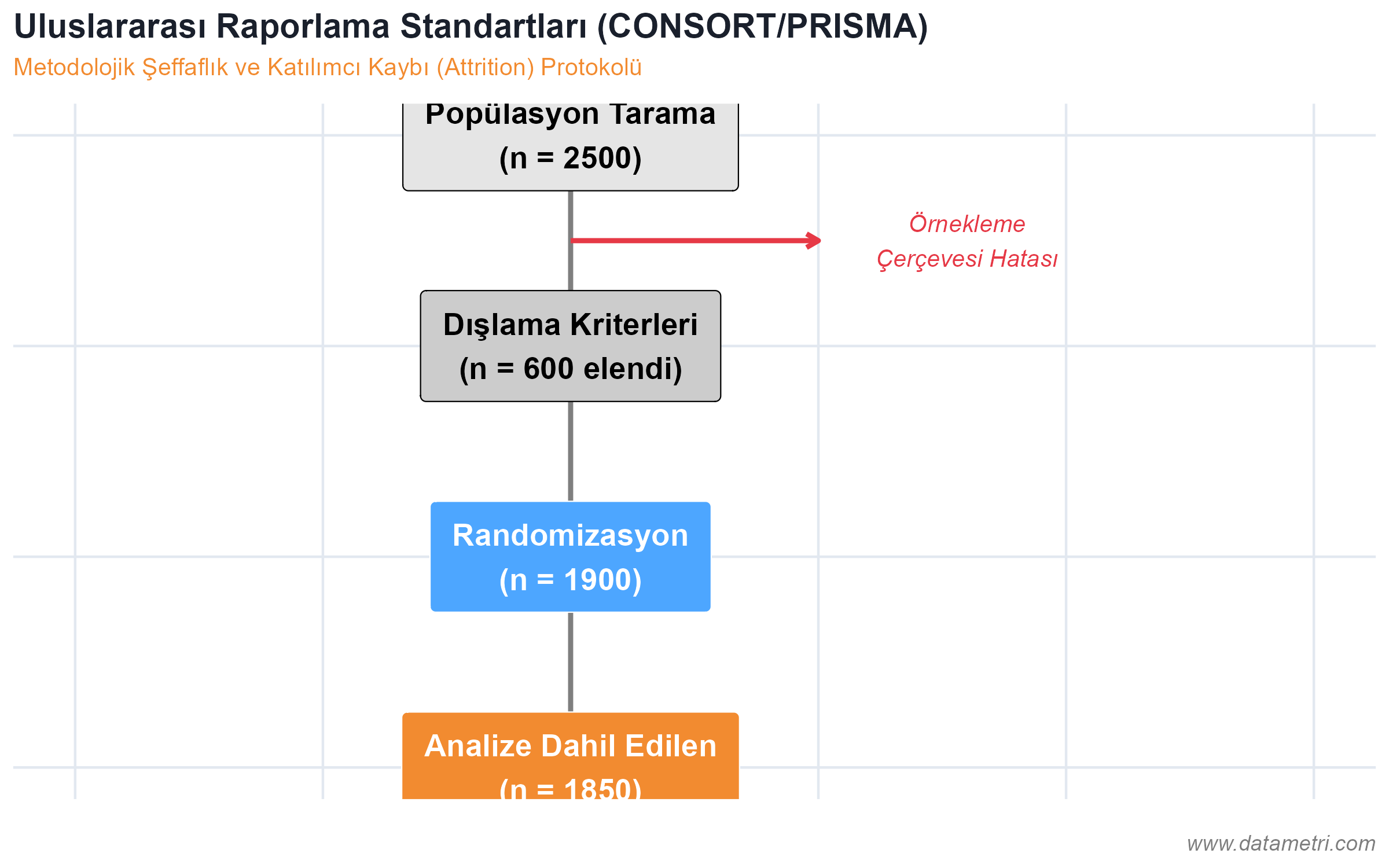
  • Standard Violations: We integrate all transparency criteria and participant Flow Diagrams required by CONSORT protocols for clinical trials, STROBE for observational studies, and PRISMA for meta-analyses into the methodology document even before the research begins.
CONSORT / PRISMA Participant Flow Diagram
caption = 'www.datametri.com'
This phase is a "Publication Acceptance Guarantee" infrastructure for your studies. It eliminates with a scientific armor the possibility of global authorities or review boards rejecting your study on the grounds of "Methodological Flaw" or "Lack of Transparency".

Let's Construct Your Research Design Together

Contact us to audit the scientific validity of your methodology and align it with international standards (Q1) before you begin collecting data.